
[26003] Building Bridges Network - What will the NDIS look like in 2026?
- Tommy Dam
- 22 hours ago
- 10 min read
Updated: 4 hours ago

I have spent two decades working in some of the most tightly regulated environments in healthcare. My journey began at Fresenius Medical Care as a Quality Assurance Chemist, where I managed ISO 13485 Medical Device compliance, TGA audits, and PIC/S Guidance to Good Manufacturing Practices (GMP), while also implementing Lean Six Sigma methodologies. I later joined Sonic Clinical Trials, a subsidiary of Sonic Healthcare Limited, as a QA Officer, where I focused on applying rigorous data integrity principles from my previous experience to enhance their quality systems, their root-cause analysis process, internal audit and vendor management programme, instrument & software verification and validation methodologies, and developed robust business contingency plans.
From there, I was recruited by Afea Care Services (now known as Leora Healthcare), where I continued to refine my expertise as a quality professional. During my time at Leora Healthcare, I played a key role in developing and implementing their quality system—a process that is based on ISO 9001.
In every one of those roles, the lesson was the same: the organisations that thrived were not the ones with the most resources. They were the ones that built systems capable of turning data into trust.

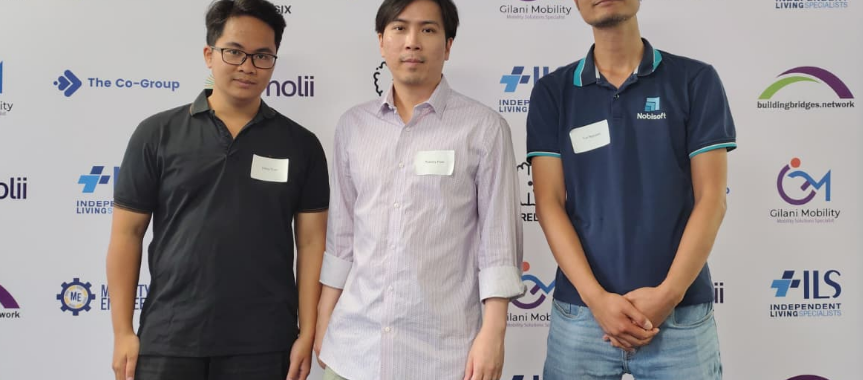
When I founded Carelogix, the Data Integrity (DI) principles were at its core. So when I sat down to watch the Building Bridges panel discussion on 29 January 2026, I was not listening as a spectator. I was listening as someone who has seen — up close, across multiple industries — exactly what happens when organisations do not get this right.
The National Disability Insurance Scheme has spent its first decade in a state of remarkable growth. From its pilot sites to its nationwide rollout, the NDIS expanded rapidly, onboarding hundreds of thousands of participants and billions of dollars in funding almost overnight. But 2026 marks a turning point. The era of growth-at-all-costs is over. What is replacing it is something more complex, more demanding, and ultimately more important: a concerted push toward sustainability, standardisation, and long-term fiscal responsibility.
On 29 January 2026, the Building Bridges Network hosted its monthly panel event in Silverwater, Sydney, bringing together some of the sharpest minds in the disability sector. The panel — titled "What Will the NDIS Look Like in 2026?" — facilitated by Emanuel Gini, National Operations Manager at Ability Connect featuring three industry leaders: Jonathan Salgo, Founder of Found; Teresa Lam, from Unisson Disability; and Esha Oberoi, Founder and Co-CEO of Leora Healthcare. What emerged from their discussion was not just a forecast of the year ahead, but a candid and at times uncomfortable reckoning with where the sector stands — and where it needs to go.
Meet the Panel Members

Jonathan Salgo — Founder, Found. Jonathan has been in the disability space for a decade, drawn to it both personally and professionally. Found helps service providers recruit high-quality support workers — a challenge that, as the evening would reveal, sits at the very heart of the sector's struggles. Jonathan previously consulted to the NDIA during the NDIS rollout and founded a plan management company, giving him a rare vantage point across the entire system.
Teresa Lam — Unisson Disability. Teresa spent 20 years in technology before making a deliberate career change into disability services. Now a researcher at Heart Lock Data, she describes herself as almost obsessed with understanding every detail of how the NDIS operates. Her tech background gives her a unique lens through which to evaluate the digital transformation the sector is undergoing.
Esha Oberoi — Founder and Co-CEO, Leora Healthcare (yes — my former employer). Esha's leadership is shaped by lived experience and a belief that everyone deserves the opportunity to shine. Leora Healthcare, has been ranked on the AFR Best Places to Work list for five consecutive years. Esha brings a holistic view of care delivery and a sharp awareness of how political and economic forces are reshaping the landscape for providers.
The I-CAN Assessment and the Rise of Algorithm-Driven Planning Is Coming — Whether We Like It or Not
Perhaps the most consequential change facing the NDIS in 2026 is the introduction of the I-CAN (International Classification of Functioning, Disability and Health) assessment framework and its integration into a new, more standardised support needs assessment process. The I-CAN tool has been trialled and endorsed by the Centre for Ability for approximately two years, but it has never been piloted under the NDIS itself — a fact that understandably has the sector on edge.
Jonathan laid out the mechanics with characteristic clarity. Under the new system, participants will undergo assessments that score their functional needs across domains such as mobility, communication, and self-care. This data will feed into a computer system that — and here is where the conversation grew particularly tense — may generate a participant's budget with no human intervention whatsoever.
"There is a chance that that system will basically provide a budget at the end of it, with no human intervention in that process. Similar people will look similar in terms of the plans."
The implications are significant. On one hand, this promises greater equity. Historically, the amount of funding a participant received depended enormously on geography, the skill of their advocate, and the individual judgment of their planner. A more standardised system could smooth out these inequities. On the other hand, it raises a deeply unsettling question: what happens when someone believes their plan is wrong? Under current arrangements, the Administrative Review Tribunal can substitute a different budget amount. Under the new system, the tribunal would only be able to send the decision back to the computer for reassessment — a loop with no human in it.
Teresa drew a sharp parallel to the infamous Robo Debt scandal, where an automated government system incorrectly matched welfare recipients with debts, causing enormous distress. "There's a good reason to believe that having a system just spit out things very quickly, where that's the only assessment form, doesn't feel like it's a good mechanism when you think something legitimately should be challenged" she noted. The parallels are not exact, but the underlying concern — trust in automated government decision-making — is very real.
The Compliance Imperative
Mandatory registration for NDIS service providers is no longer a distant possibility — it is imminent. But the panel pushed back firmly against the notion that compliance is simply another box to tick. Teresa reframed it in strikingly pragmatic terms: compliance should be understood as a tool that makes you do things right the first time, freeing up your time to do what really matters.
This is not mere optimism. The cost of non-compliance is measurable. A single incident — whether a safeguarding breach, a billing error, or a failure in documentation — can consume ten hours or more of organisational time to investigate, report, and resolve. Every hour spent mopping up avoidable problems is an hour not spent innovating, not spent with participants, and not spent building the kind of culture that actually retains good staff.
Esha reinforced this point from a strategic perspective. Aged care and disability are both now sitting under the Department of Health, which means the compliance frameworks are converging. For providers, this creates a new kind of pressure: capped pricing, declining margins, and rising compliance costs are all happening simultaneously. The question is no longer whether to invest in compliance systems, but how to do so in a way that becomes a genuine competitive differentiator.
Compliance is not a back office function. It is part of the innovation that we need to offer the sector, because it is ultimately what safeguards our participants.
The Support Worker Crisis Is a System Problem
If there is one issue that united every voice in the room on the evening of 29 January, it was the crisis in support worker retention. Jonathan, whose company specialises in placing support workers, laid out the reality bluntly: support workers are overwhelmingly casual, they often work for four or five different providers simultaneously, and they are under immense financial pressure from the rising cost of living. The result is a revolving door. Participants lose continuity. Providers lose institutional knowledge. And the workers themselves — many of whom entered the profession out of genuine compassion — feel undervalued and disconnected. Jonathan's words deeply resonated with me, as they echoed the challenges I encountered while conducting countless investigations and audits during my time with my previous employer.
Jonathan offered several practical interventions drawn from his experience. Workers who live close to where they work are far more likely to stay. Small gestures — a birthday message, a gift voucher, even a few dollars toward petrol — can make an outsized difference to people who feel they are at the bottom of the pile. These are not expensive solutions. They are human ones.
But the panel also acknowledged that the support worker crisis is, at its root, a structural problem baked into the individualised funding model itself. Before the NDIS, support workers in state-run services were permanent employees. They were better trained, more committed, and did not need to chase billable hours across multiple providers. The shift to individualised funding plans was necessary for choice and control, but it created a workforce ecosystem that was never adequately designed for the reality of casual, fragmented, low-security work.
The government's push toward "foundational supports" — moving some support functions out of individual plans and into community-based or school-based settings — is an attempt to address this structural tension. Whether it will succeed remains to be seen, but the ambition is clear: find ways to support people with disability that do not depend entirely on the billable hour.

Use AI and Automation to Go Deeper, Not Wider
The panel's discussion of technology was notably more optimistic than its conversation about automated assessments. Esha shared a simple but powerful example. Until recently, a care manager conducting a home assessment would spend two and a half to three hours sitting with a participant, asking questions — while simultaneously typing notes into a system. There was no eye contact. No rapport. No real conversation. The care manager was, in effect, a data entry clerk with a clipboard.
Now, with AI-powered transcription tools, the care manager can simply record the session (with appropriate consent and security), have the conversation naturally, and let the system handle the documentation, categorisation, and summary. The result is not just efficiency — it is a fundamentally better experience for the participant, and a more meaningful interaction for the worker.
Teresa cautioned that the value of technology depends entirely on the quality of the data fed into it. A poorly designed system, fed incomplete or biased information, will produce poor outcomes — automated or not. But she also noted something encouraging: the NDIS is conducting a five-year study on the I-CAN rollout, and they have acknowledged that the tool is not designed for children or for highly complex cases. There is, at least in principle, an openness to learning and adjusting as the system matures.
Future-Proofing the NDIS with Evidence-Based Compliance
The conversations at the Building Bridges panel on 29 January 2026 made one thing unmistakably clear: the NDIS is entering its most demanding phase yet. Providers face capped pricing, tightening margins, escalating compliance requirements, and a workforce in crisis — all while being asked to deliver better outcomes for participants. The temptation to retreat into pure survival mode is understandable. But the panel's collective message was a firm rejection of that path. Survival is not enough. The scheme demands more.
Having spent two decades navigating highly regulated environments — from pharmaceutical manufacturing under PIC/S guidance at Sonic Healthcare and Fresenius Medical Care, to quality systems at Leora Healthcare — I can say with confidence that the single most important lesson those industries taught me is this: regulation, at its core, is built on the evidence organisations are able to present. It is not enough to do the right thing. You must be able to prove it. The NDIS is moving in exactly this direction, and the providers who understand that shift early will be the ones who not only survive 2026, but are positioned to lead for years beyond it.




Regulation, at its core, is built on the evidence organisations are able to present. It is not enough to do the right thing. You must be able to prove it.
This is the principle that shaped every decision we made when building Carelogix. The platform — comprising the Carelogix Nexus web application and the Carelogix Note mobile app — was not designed simply to solve today's compliance challenges. It was designed to future-proof organisations against the escalating evidentiary expectations that are now becoming the standard across disability, aged care, and broader healthcare regulation in Australia. Every interaction captured through Carelogix Note — voice recordings, photos, location data, document uploads — is automatically compiled, timestamped, and stored securely within Australia in full adherence with data sovereignty requirements. This is not retrospective documentation assembled after the fact. It is evidence captured at the point of care, in real time, with full traceability from event to report to audit.
But future-proofing is about more than audit readiness. It is about building systems that scale with the sector as it matures. The I-CAN assessments, the convergence of aged care and disability under the Department of Health, the push toward standardised plans — every one of these reforms increases the volume and complexity of data that organisations must manage. Carelogix is architected for exactly that reality. Its automated reporting eliminates the hours of manual documentation that currently consume frontline staff, freeing them to focus on the thing that no technology can replace: being present with the people they care for. Its AI voice-enabled assistant gives frontline workers on-demand access to client-specific strategies and care plans without interrupting their work is currently under development and same with Nexus web application which aims to transforms raw data into actionable dashboards for leadership, closing the loop between what happens at the coalface and the decisions made in boardrooms.
The NDIS in 2026 will test every organisation in this sector. But the organisations that will thrive beyond 2026 — in 2027, 2028, and well into the decade ahead — are those that recognise the direction of travel now. Evidence-based regulation is not a future possibility. It is the present reality, and it is only going to intensify. Carelogix was built to meet that reality head-on, drawing on decades of experience in environments where data integrity was not optional, it was foundational. The disability sector deserves that same standard. And with the right technology in place, there is no reason it cannot have it.
If you're ready to see what evidence-based compliance looks like in practice, you can try Carelogix today at no cost. Navigate to Carelogix Nexus, sign up for an account, then download Carelogix Note from the Apple App Store or Google Play Store. Log in, start capturing information at the point of care, and see first-hand how the platform turns real-world service delivery into audit-ready, evidence-backed reports. The regulatory environment is tightening. The question is whether your organisation will be ready when it does.
![[26002] The Oak Tasmania Case](https://static.wixstatic.com/media/c3a424_d2faf443a4034ab8aacbb65080b2ffa2~mv2.png/v1/fill/w_980,h_640,al_c,q_90,usm_0.66_1.00_0.01,enc_avif,quality_auto/c3a424_d2faf443a4034ab8aacbb65080b2ffa2~mv2.png)
![[26001] We're Going Live on Apple App Store: Introducing Carelogix Note – Where Care Meets Intelligence](https://static.wixstatic.com/media/c3a424_7992238e0f9348109bfcf098c6cfc1bd~mv2.png/v1/fill/w_976,h_886,al_c,q_90,enc_avif,quality_auto/c3a424_7992238e0f9348109bfcf098c6cfc1bd~mv2.png)
![[25013] Carelogix 2025: A Year of Building Foundations and Breaking Barriers](https://static.wixstatic.com/media/c3a424_0ae3336b1cbb466e913dac1638d58f61~mv2.png/v1/fill/w_980,h_532,al_c,q_90,usm_0.66_1.00_0.01,enc_avif,quality_auto/c3a424_0ae3336b1cbb466e913dac1638d58f61~mv2.png)
Comments